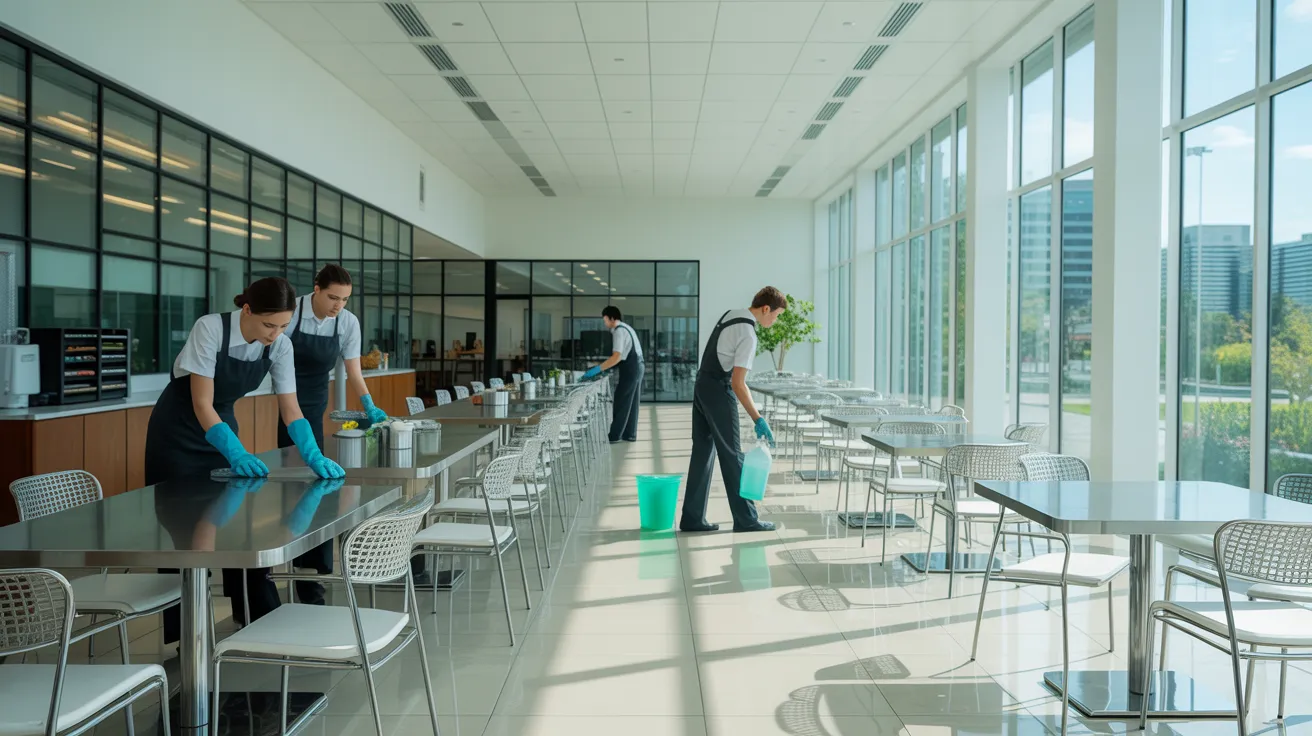
Food hygiene and commercial cleaning experts in Brampton support your business in maintaining restaurants, commissaries, baking operations, warehouses, and food service units in compliance. They disinfect frequently touched areas, food preparation zones, equipment, floors, drains, restrooms, and prep areas using certified sanitizers, proper dilution, and documented exposure durations.
Essential Summary
- Food safety cleaning specialists from Brampton work with restaurants, grocery departments, commissaries, warehouses, bakeries, schools, mobile vendors, and allergen-sensitive operations.
- They clean frequently contacted areas, food-contact equipment, kitchens, floors, drains, restrooms, and storage areas using zone-based workflows to avoid cross-contamination.
- Verification of proper chemical concentration, appropriateness, and contact time is conducted by qualified vendors, with finishing documented using checks, inspections, and remedial documentation.
- Danger, production rate, switches, spills, and regulations need to inform cleaning plans, with daily, periodic, and annual activities distributed by location.
- Contractors must exhibit hazard analysis knowledge, health regulatory understanding, safety training preparation, protection, references, coded instruments, and inspection-ready maintenance paperwork.
Brampton Venues That Need Food Safety Cleaning: Which Ones?
You must maintain food safety cleaning if your business is regulated by health inspections, food codes, or HACCP protocols. This covers food venues, break rooms, food centers, supermarket areas, butcheries, seafood displays, shops, and commercial food prep.
Proper hygiene protocols continues to be necessary in storage facilities, production centers, refrigerated warehouses, bakeries, school nutrition services, event spaces, and delivery hubs. Temporary mobile establishments are included, such as mobile kitchens, market vendors, and seasonal booths. Your location needs written cleaning standards when your team handle raw materials, divide prepared dishes, warm meals, or keep allergens stored. In Brampton, food safety is not elective; it comprises statutory, functional, and public health adherence.
Which Areas Do Brampton Cleaning Experts Cover?
You need skilled cleaning experts who sanitize frequently touched areas, kitchen spaces, flooring, and bathrooms to maintain food safety and public health requirements. These areas are targeted because they carry the greatest contamination risk, slip and fall dangers, and health code violations.
Understanding their cleaning procedures enables you to validate your operation's sanitation satisfies required standards and regulations.
High-Touch Surface Sanitizing
create a sanitizing schedule
By changing cloths, implementing unidirectional systems, and segregating cleaning supplies by area, you maintain a documented, justified, and ready for inspection cleaning protocol.
Kitchens, Floors, and Restrooms
Expect Brampton cleaning experts to focus on kitchens, floors, and restrooms because each area carries unique foodborne illness prevention, accident prevention, and sanitation risks. In industrial kitchens, you need grease removal from cooking stations, appliance surfaces, drain systems, preparation areas, and backsplashes to reduce bacterial growth and pest activity.
Professional floor upkeep with documentation is also included. is also provided as part of the service.
For restroom sanitation, cleaners sanitize touchpoints, fixtures, partitions, dispensers, and waste containers, then replace products and reduce odor. They also maintain restaurant cleaning supply rooms where product storage, sink cleanliness, and drain systems impact daily sanitation standards and worker protection.
Food Safety Cleaning Significance for Brampton Businesses
In Brampton, you must copyright food-safe cleaning standards to meet health code requirements and pass inspections. You also minimize cross-contamination by cleaning and sanitizing food-contact surfaces, equipment, and high-touch areas correctly. Most importantly, you help protect public health by lowering the risk of foodborne illness in your facility.
Health Code Compliance
Since Brampton food companies must follow rigorous sanitary regulations, your cleaning procedures directly influences your competence to adhere to health codes, protect diners, and sidestep regulatory penalties. You must maintain sanitized food contact points, recorded sanitation plans, appropriate product handling, and verifiable staff procedures that comply with municipal and provincial inspection expectations.
Should your cleaning standards deteriorate, you face citations, compliance orders, reputational harm, and possible interruption to service during further inspections or enforcement reviews.
Cross-Contamination Prevention
Maintaining regulatory compliance copyrights on your power to stop cross-contamination during everyday food preparation and sanitation. You must separate raw ingredients from ready-to-eat foods, sanitize prep surfaces between tasks, and position cleaning agents away from food surfaces. Explicit protocols lower contamination threats and reinforce steady regulatory adherence.
Implementing allergen segregation helps keep priority allergens from contacting communal work zones, bins, or devices. Deploy dedicated cutting boards, color-coded tools, and clear tool marking so workers don't combine products during preparation or service. Require handwashing after handling raw meat, seafood, eggs, or allergen-containing products. Replace wiping cloths regularly, and verify sanitizer strength with test strips. When your team learns these guidelines per shift, you establish a more hygienic, safer workplace that satisfies Brampton's food safety needs regularly.
Community Health Protection
When food safety cleaning deteriorate, you don't only risk a failed inspection—you expand the chance of foodborne illness affecting customers, staff, and the larger Brampton community. You also undermine your responsibility in safeguarding community wellness, especially in high-traffic food premises where pathogens travel quickly through surfaces, equipment, and touchpoints.
You require cleaning protocols that remove contaminants, sanitize effectively, and validate outcomes. This involves maintaining contact periods, selecting approved disinfectants, documenting procedures, and coaching employees to meet health-unit expectations. These controls promote pathogen control by decreasing microbial counts before contaminating food or hands. Throughout Brampton, effective sanitation protects vulnerable communities, minimizes disease potential, and demonstrates your diligence. When you follow proper protocols, you exceed regulations—you lower hazards and facilitate secure food handling region-wide.
How Can Cleaning Practices Ensure Food Safety Compliance?
Rigorous cleaning routines promote food safety compliance by lowering contamination exposure, limiting pathogen development, and ensuring your facility complies with sanitation requirements under HACCP-based programs and public health regulations. You confirm that food-contact surfaces stay visibly clean and microbiologically controlled, facilitating documented preventive controls and inspection readiness.
Effective cleaning also improves allergen mitigation by removing residues that can lead to undeclared allergen exposure. by eliminating residues that can trigger undeclared allergen exposure.
Establishing When to Plan Commercial Cleaning
daily standard cleaning
bi-weekly schedules for drain systems, vents, storage racks, and hard-to-reach zones, determined by inspection findings and sanitation records.
What Should You Look For in Brampton Cleaning Experts?
Start by screening providers against food sanitation standards, not cost only. You should verify that each company understands CFIA, public health, and HACCP-aligned expectations relevant to your facility. Ask for proof of insurance, WHMIS compliance, documented staff training, and supervision practices. Review whether technicians understand contamination prevention, chemical handling, and traceable sanitation records.
You should also assess operational reliability and responsibility. Request references from food facilities in Brampton, then examine turnaround periods, corrective actions, and communication standards. Confirm the company supports supplier audits and can present audit-ready records when regulators or third parties request evidence. Check whether equipment is maintained is performed, colour-coded tools are used appropriately, and site-specific hazards are recognized. A competent service protects regulatory adherence, product integrity, and your brand reputation.
What's included in a Food Safety Cleaning Plan?
Establish a documented program that clarifies every sanitation task, standard, and responsibility ahead of production commencement. You should specify cleaning intervals, permitted substances, dilution percentages, exposure times, instruments, and inspection methods for each zone, surface, and piece of equipment. Make sure to include pre-operational inspections, corrective actions, and employee training requirements.
Your plan should also cover cross-contamination controls, waste handling, pest-prevention measures, and documented schedules for bathrooms, drainage systems, surfaces, and food-preparation zones. Detail how you'll separate raw and ready-to-eat processes, enable ingredient tracking, and ensure accurate allergen labeling through validated cleaning between product changes. You should designate accountability, keep signed records, Brampton Janitorial Services and compare results against regulatory standards, HACCP controls, and customer requirements. When gaps appear, update procedures immediately and re-educate staff.
Commonly Requested Inquiries
Can cleaning services support nighttime operations in Brampton facilities?
If you manage regulated spaces, you'll also require records that support audits and maintain assurance.
Do Brampton cleaning experts offer hazard containment services?
Yes, you can expect Brampton cleaning experts who offer emergency spill response solutions. They manage hazardous materials, assess risks, contain contamination, and start rapid decontamination to reduce exposure and prevent business interruption. You should confirm response times, training certifications, PPE protocols, and disposal procedures. If your facility must meet regulatory requirements, select a service that records events, maintains regulatory procedures, and supports audit readiness.
Are green disinfectants appropriate for food preparation areas?
Yes, plant-based sanitizers can be safe for surfaces contacting food if you choose disinfectants approved for food contact and regulatory compliant. You should validate contact times, mixing proportions, and rinse protocols before use. Many plant based formulas decrease toxic chemical contact, but you require proof of efficacy against target microorganisms. To keep surfaces residue-free, you need to follow precise manufacturer instructions and validate the disinfecting agent complies with food sanitation requirements.
Will cleaning schedules respond to production fluctuations?
Absolutely, cleaning schedules enable modification for seasonal variations. Revise schedules, staff levels, chemicals, and testing procedures to fit seasonal workflows while preserving compliance standards. Decrease production downtime through timing cleaning during line changes, peak volumes, and operational patterns. Additionally, update written procedures, instruction programs, and environmental testing to address seasonal hazards, additional allergens, or increased soiling. Frequent reviews keep the schedule current.
Are professional cleaning companies providing staff training on sanitation best practices?
Absolutely, commercial cleaners frequently provide employee education on hygiene standards. Your staff gets instruction on proper chemical use, dwell times, contamination avoidance, equipment disassembly, and paperwork. They generally match guidance with HACCP, GMP, and CFIA or local public health requirements. Many conduct sanitation audits to verify compliance, pinpoint weaknesses, and strengthen corrective measures. This enables you to sustain consistent procedures, pass inspections, and lower contamination dangers consistently.
Closing Remarks
By collaborating with Brampton commercial cleaning and food safety professionals, you aren't just organizing—you keep your operation inspection-ready and your practices in compliance. From production areas to kitchen zones, every sanitized surface and organized space reduces pest risk and avoids expensive losses. By arranging service on the right schedule and adhering to a systematic cleaning protocol, you secure your team, customers, and your credibility. In a heavily controlled environment, clean spaces must be prioritized—they're key to business compliance.